
More Than Garage Floors: Everywhere Outback Concrete Coatings Shows Up
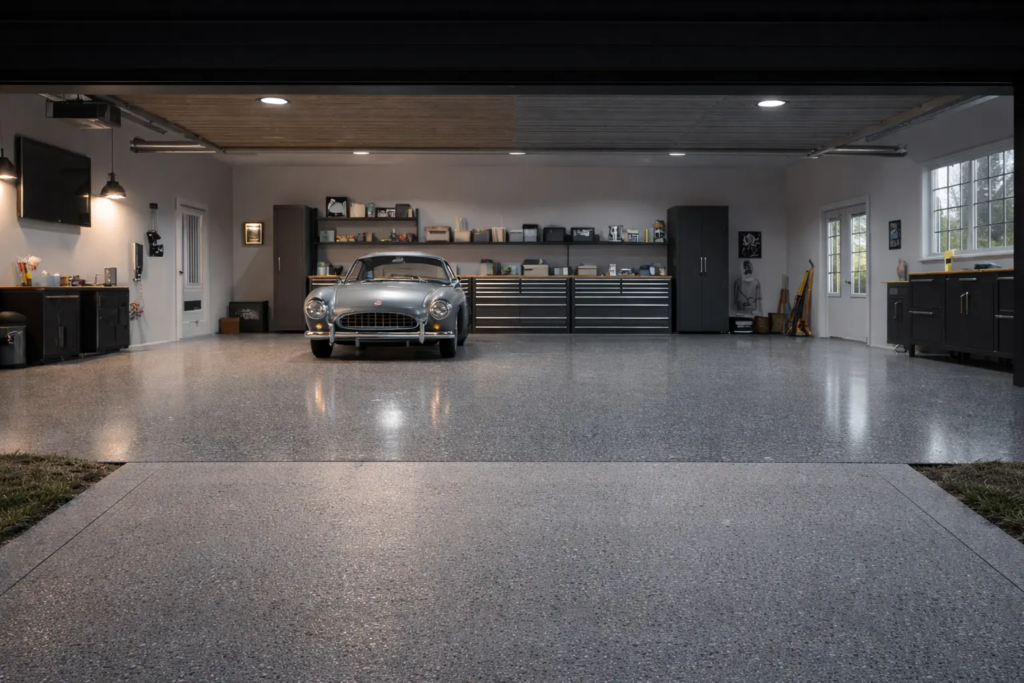
Blog More Than Garage Floors: Everywhere Outback Concrete Coatings Shows Up Here’s a full look at where we work, whether it’s in your home, your business, or somewhere in between. FREE DESIGN + Quote Around the House Garage floors are our bread and butter, coatings built to handle vehicle traffic, hot tires, oil drips, road salt, and Indiana’s freeze-thaw cycles without cracking or peeling. Basements bring a different challenge: moisture coming up through the slab from below grade. Our basement coatings use moisture-mitigating polyurea specifically to seal that out, turning a damp, musty space into a clean, finished one. Kitchens, laundry rooms, and mudrooms get the same seamless, easy-to-clean treatment, with decorative flake and color options so it still looks like part of the house rather than a garage floor indoors. Man caves and bonus rooms garage conversions, home gyms, workshops, get floors that can handle heavy equipment and daily use while still looking finished. Patios, pool decks, driveways, sidewalks, and walkways all move outside, where UV stability and slip resistance matter most. These coatings resist fading, cracking, and peeling in direct sun, and pool deck and walkway surfaces are finished with non-slip texture for safety around water and winter ice. For Businesses and Institutions Commercial floors retail shops, warehouses, dealerships, need to look presentable to customers while surviving daily foot and equipment traffic. Automotive and dealership floors go a step further, built chemical-resistant and easy to clean for service bays and detail facilities where fluids and grime are a daily reality. Industrial facilities manufacturing plants, logistics and distribution centers, get forklift-rated, chemical-resistant floors designed for the heaviest daily use. Retail and institutional spaces restaurants, breweries, fitness studios, offices, get the same seamless, professional finish, tailored to spaces where appearance matters as much as durability. Sport courts basketball, pickleball, and multi-use courts, get slip-resistant surfaces with custom color options built for athletic use. Where You’ll Find It Because the system is built to handle moisture, impact, chemical exposure, and constant use, it shows up anywhere a concrete surface takes a beating: Garage floors the most common application, standing up to hot tires, dropped tools, road salt, and oil and chemical spills while keeping a showroom finish. Basements where the Vapor Lock layer matters most, guarding against the moisture that comes up through slabs below grade. Patios and pool decks where UV stability and slip resistance both have to hold up outdoors, season after season. Driveways and sidewalks surfaces exposed to weather, vehicle traffic, and de-icing salt year-round. Commercial and industrial floors retail spaces, automotive shops, and industrial facilities where heavy daily use and chemical exposure make a thin DIY-grade coating a losing bet. Our Services One System. Three Ways To Get There. Every project starts with the same goal: a floor that looks great and holds up. Whether that means coating what you have, upgrading to a rubberized finish, or starting over with fresh concrete, it’s all part of the Outback process. Our Signature System Concrete CoatingThe Armor Core System™ Multi-layer, industrial-grade build Chip, stain & UV resistant Ready to walk on in as little as 24 hours ExploreConcrete Coating Rubaroc® Coating Slip-resistant, textured finish Cooler, softer surface underfoot Built for pool decks & outdoor living spaces ExploreRubaroc® Concrete Replacement Full tear-out and disposal Fresh, properly graded pour Pairs with either coating option ExploreConcrete Replacement Which Concrete Coating Is Actually Right for Your Floor? Epoxy, polyurea, polyaspartic. They are not interchangeable. Choose wrong and you redo your floor in a few years. Choose right and it lasts. SEE BREAKDOWN
The Armor Core System™: What It Is, and Why It Outperforms a Standard Epoxy Floor
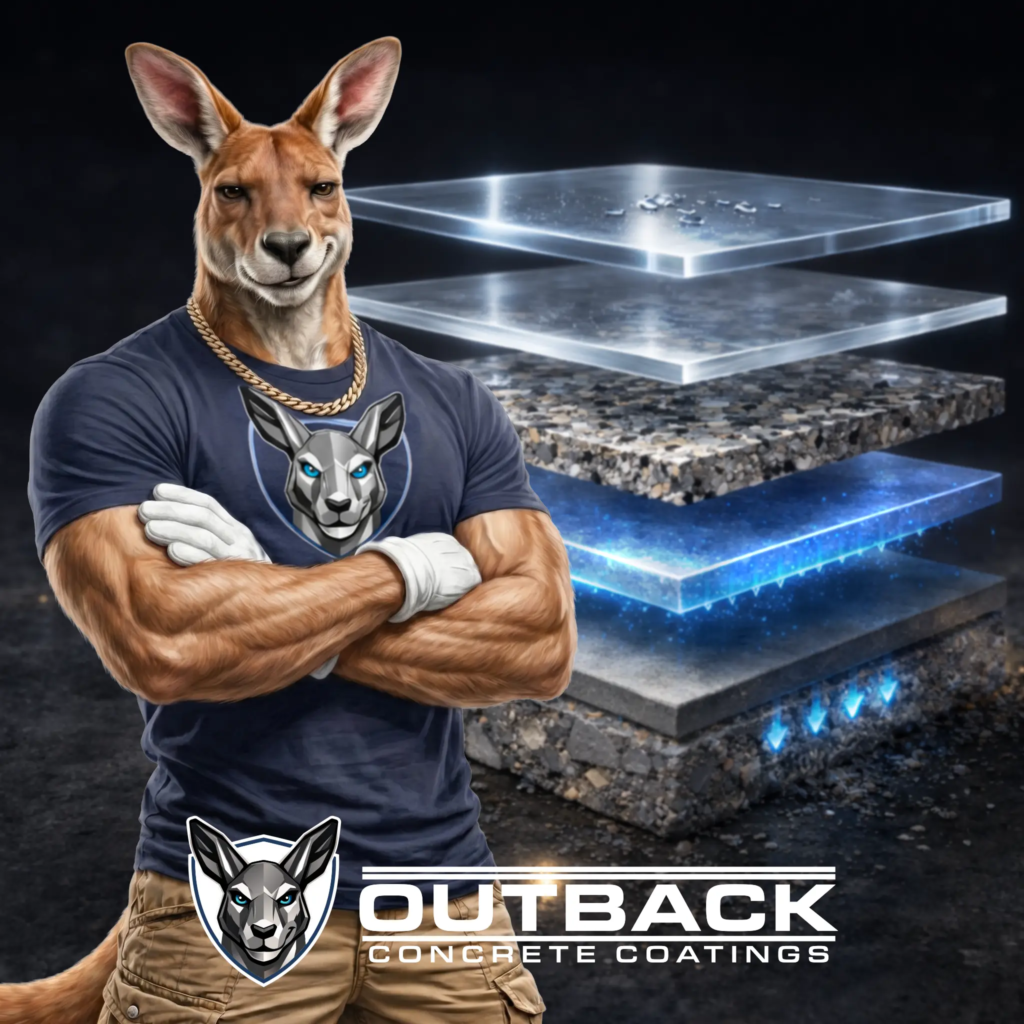
Blog The Armor Core System™: What It Is, and Why It Outperforms a Standard Epoxy Floor Here’s what’s in it, why the layered approach outperforms a standard epoxy kit, and where you’ll find it doing the most work. FREE DESIGN + Quote What the Armor Core System™ Actually Is Rather than a single coat rolled over bare concrete, the Armor Core System™ is built in five distinct layers, each solving a different way floors typically fail: Surface Engineering Before anything goes down, we mechanically grind, repair, and profile the concrete itself. This step creates the mechanical bond that everything else depends on, it’s also the step most DIY kits and cheap epoxy jobs skip, which is why they peel. Vapor Lock A deep-penetrating moisture barrier that works below the surface to block vapor transmission coming up through the slab. Moisture pushing up from underneath is one of the most common, and most invisible, causes of coating failure. Build Layer The impact-resistant core of the system, bonded directly to the prepped concrete and built to absorb daily use, heavy loads, and surface stress without cracking or delaminating. OverShield A UV-stable, chemical-resistant layer that stands up to sun exposure, staining, and chemical wear without yellowing or breaking down over time. Grip Seal A slip-resistant clear topcoat that adds controlled traction while locking in the finish underneath. Each layer has one job. Skip a layer, or skimp on the prep, and the whole system is only as strong as its weakest step. That’s the difference between a floor that’s engineered and a floor that’s just painted. Why It Beats a Standard Epoxy Floor Most of what gives concrete coatings a bad reputation isn’t the concept, it’s a single, thin coat of epoxy applied over concrete that was never properly prepped. The material itself has real limitations, and the numbers aren’t close: Lifespan: A typical epoxy floor lasts roughly 3 to 5 years before it needs to be redone. A properly installed polyurea-based system like the Armor Core™ is built to last 15 to 20 years or more, one installation instead of four or five. Cure time: Epoxy generally takes 4 to 7 days to fully cure before a garage is back in use. The Armor Core System™ installs in a single day, with the floor ready for foot traffic in as little as 24 hours. UV stability: Epoxy is notorious for yellowing and fading with sun exposure, often within a year or two. The OverShield layer is built to hold its color and finish under direct UV exposure. Flexibility and impact resistance: Epoxy is rigid, which means it’s prone to cracking during freeze-thaw cycles or from dropped tools and heavy equipment. Polyurea-based systems are significantly more flexible and impact-resistant, so they move with the slab instead of against it. Hot tire pickup: One of epoxy’s most common failure points is hot tire pickup, where the heat and weight of a tire literally lifts the coating off the floor. A properly formulated polyurea system is built to resist it. That’s why the Armor Core System™ comes with a lifetime warranty and our No Peel Promise, guarantees that make sense once you know how much of the coating’s performance was decided before a drop of material ever went down. Where You’ll Find It Because the system is built to handle moisture, impact, chemical exposure, and constant use, it shows up anywhere a concrete surface takes a beating: Garage floors the most common application, standing up to hot tires, dropped tools, road salt, and oil and chemical spills while keeping a showroom finish. Basements where the Vapor Lock layer matters most, guarding against the moisture that comes up through slabs below grade. Patios and pool decks where UV stability and slip resistance both have to hold up outdoors, season after season. Driveways and sidewalks surfaces exposed to weather, vehicle traffic, and de-icing salt year-round. Commercial and industrial floors retail spaces, automotive shops, and industrial facilities where heavy daily use and chemical exposure make a thin DIY-grade coating a losing bet. The Bottom Line A concrete coating is only as good as what’s underneath it and how it’s put together. The Armor Core System™ treats every layer as a job to do, prepping the slab, blocking moisture, absorbing impact, resisting UV and chemicals, and finishing with real traction, instead of relying on one coat to do everything at once. That’s the difference between a floor that needs to be redone in a few years and one that’s backed by a lifetime warranty. If you’re ready to see what it looks like in your space, get a free design and quote from Outback Concrete Coatings. Which Concrete Coating Is Actually Right for Your Floor? Epoxy, polyurea, polyaspartic. They are not interchangeable. Choose wrong and you redo your floor in a few years. Choose right and it lasts. SEE BREAKDOWN
Rubber vs. Polyaspartic Concrete Coatings: Which Is Right for Your Pool Deck?
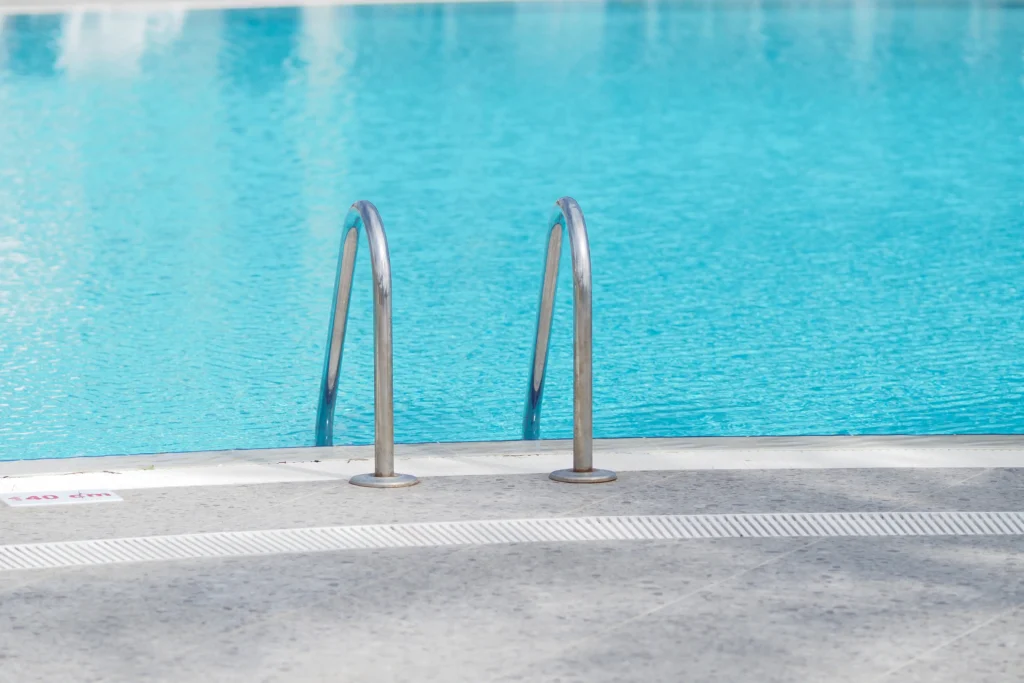
Blog Rubber Vs. Polyaspartic: Which is right for your Pool Deck? Thinking about rubber surfacing for your pool deck or patio? See how it compares to polyaspartic concrete coatings in comfort, durability, and cost. FREE DESIGN + Quote What Is rubber coating, Exactly? It’s a poured-in-place rubber safety surface. Small rubber granules are mixed on site with a resin binder, then poured and troweled directly over the existing substrate, concrete, asphalt, wood, brick, and several other surfaces, at about a quarter-inch thick. It’s designed to cure within about 24 hours and is permeable, so water drains through it rather than pooling on top. It was originally developed for playgrounds and splash pads, where cushioning and fall protection matter most, and that DNA still shows in how it performs: soft underfoot, cool in the sun, and forgiving on bare feet. What Is Polyaspartic Coating (The Armor Core System™)? Polyaspartic is a fast-curing, aliphatic coating chemistry; a step up from standard epoxy in both toughness and UV stability. Our Armor Core System™ builds it into a five-layer process: diamond-ground surface prep, a moisture mitigation layer, a polyurea base with decorative color chips, a polyaspartic protective topcoat, and a slip-resistant finish coat. It’s installed in a single day, cures fast enough for foot traffic the next day, and is backed by a lifetime, no-peel warranty. Unlike rubber coating, it creates a hard, seamless surface rather than a cushioned one, closer in feel to a premium garage or patio floor than a rubber mat. Comfort and Feel This is where the two products differ the most. Rubber granules give it real give underfoot, which is a genuine advantage around pools where kids are running on bare feet or where fall protection is a priority, like a play area. It also tends to stay cooler in direct sun than a hard-troweled surface, which matters a lot in July. Polyaspartic coatings are hard and dense. You won’t get the cushioning, but you do get a smoother, more finished look that reads more like a polished patio floor than a playground surface, closer to what most homeowners picture for an outdoor living space or entertaining area. Durability and Long-Term Performance Both products are built to hold up outdoors, but they age differently. The rubber-and-resin surface is flexible, which helps it resist cracking as the substrate below it shifts slightly with temperature changes. Over time, though, granulated rubber surfaces can be more prone to fading, surface wear in high-traffic paths, and occasional patch repairs where the resin binder breaks down. Our Armor Core System™ is built around chemical and abrasion resistance; it holds up to pool chemicals, oils, and heavy furniture traffic without peeling or yellowing, and it’s the reason we’re comfortable backing it with a lifetime warranty rather than the one-to-three-year warranties typical of basic coatings. For homeowners who want a “set it and forget it” surface, that’s a meaningful difference. Installation and Downtime Both systems install relatively quickly compared to full concrete replacement or tile. The rubber coating typically cures enough for light use within about 24 hours. Our one-day Armor Core System™ install also allows foot traffic the next day, and because it’s engineered for Indiana’s freeze-thaw cycles and clay-heavy soil, it’s installed with moisture mitigation built in from the start; something that matters more here than in the milder climates where a lot of rubber surfacing systems were originally designed to perform. Which One Should You Choose? There’s no universal right answer. It depends on what the space needs to do. Rubber surfacing makes the most sense for pure play spaces: splash pads, playgrounds, and areas where cushioning and fall protection are the top priority over finished appearance. A polyaspartic coating tends to be the better fit for pool decks, patios, and outdoor living areas that double as entertaining space; where homeowners want a durable, low-maintenance, good-looking surface that matches the rest of the home, backed by a warranty that holds up for the long run. Side by Side Rubber Coating vs. The Armor Core System™ Two ways to resurface a pool deck. No spin. Category Rubber Coating The Armor Core System™ Recommended Surface Type Cushioned rubber Poured rubber granules over substrate ✦Hard, seamless coating Polyaspartic topcoat over polyurea base Comfort Underfoot Excellent Good Fall & Impact Protection Excellent Not Designed For Abrasion & Wear Resistance Good ✦Excellent Chemical & UV Resistance Good ✦Excellent Water Drainage Excellent Permeable by design Good Sealed surface, sloped for runoff Cure / Install Time ~24 Hrs 1-Day Install Built for Fort Wayne Climate Good ✦Built For It Warranty Varies by Installer Lifetime, No-Peel Promise Get an Honest Recommendation for Your Space We’d rather tell you which surface actually fits your project than push the one we happen to install. If you’re weighing rubber surfacing against a polyaspartic coating for a pool deck, patio, or outdoor space in Fort Wayne or Northeast Indiana, reach out for a free, no-pressure consultation. We’ll walk your space, talk through how it’s actually used, and give you a straight answer, even if that means pointing you toward a different solution. Which Concrete Coating Is Actually Right for Your Floor? Epoxy, polyurea, polyaspartic. They are not interchangeable. Choose wrong and you redo your floor in a few years. Choose right and it lasts. SEE BREAKDOWN
Real Jobs, Real Surfaces, Real Results: Our Featured Projects So Far
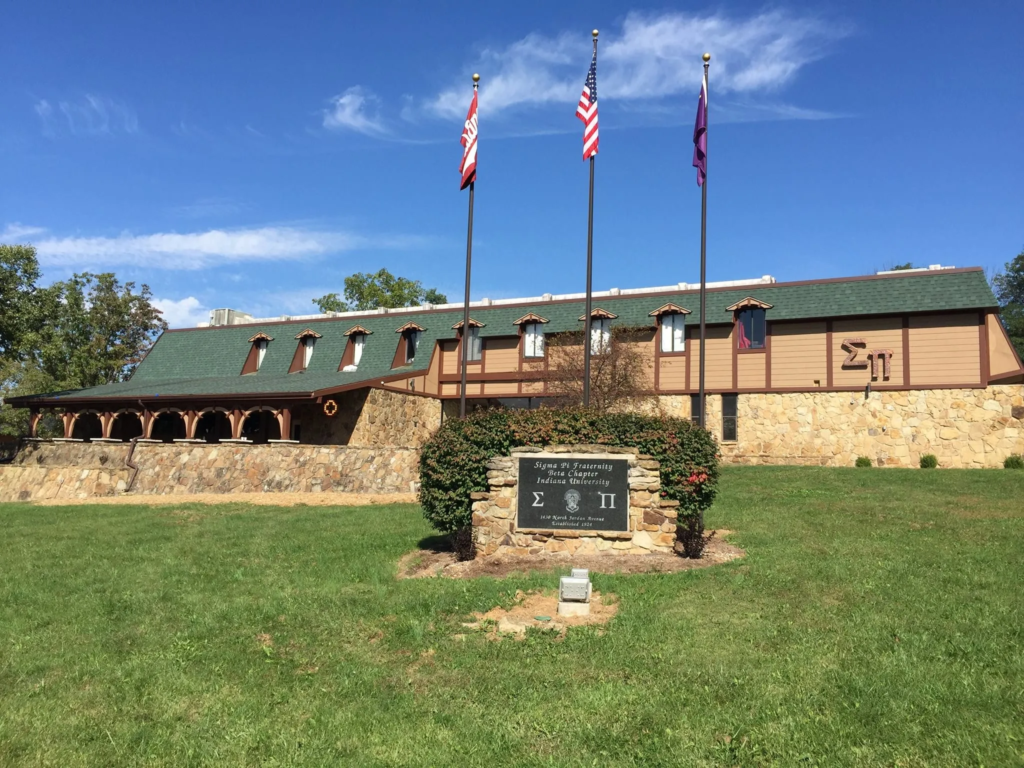
Real Jobs, Real Surfaces, Real Results: Our Featured Projects So Far We’re kicking off a new Featured Projects series to show the community exactly what an Armor Core System™ floor looks like once it’s out of the truck and into a real building, and we wanted to start by introducing you to the first two projects on the list. Get a Free Design Quote Meet the First Two Projects in the Series We’re starting the series with two jobs that couldn’t be more different from each other, one at a seminary, one at a fraternity house, but both put our Armor Core System™ through its paces in the real world. Here’s a closer look at each. Concordia Theological Seminary — Fort Wayne Our first featured project took us to Concordia Theological Seminary right here in Fort Wayne, where we coated both an exterior walkway and an interior entrance. This one was a great test of what our full-broadcast decorative flake polyurea system can really do: it had to look sharp, hold up to heavy institutional foot traffic, and transition seamlessly from the outdoor walkway straight into the building’s entrance without missing a beat. Indiana weather doesn’t make that easy. Between the freeze-thaw cycles, the salt, and the UV exposure on the exterior sections, this floor needed to be slip-resistant and UV-stable in addition to good-looking. It’s backed by our lifetime warranty, so the seminary can expect this surface to keep performing through every Indiana season for years to come. Sigma Pi Fraternity House — Bloomington Our second featured project is about as real-world a stress test as concrete coatings get: the main floor and hallway of the Sigma Pi fraternity house in Bloomington. If you’ve ever spent time in a fraternity house, you know exactly what a floor there is up against. We installed a double topcoat Armor Core System™ built to take on everything that comes with fraternity life, semester after semester, class after class. It’s the kind of job that shows what our coatings are made of when they’re not in a showroom, but in daily use by a house full of college students. More Featured Projects Are on the Way These two projects are just the start. As we continue working with homeowners, businesses, and institutions throughout Fort Wayne, Indianapolis, and the surrounding communities, including New Haven, Auburn, Angola, Huntington, Bluffton, Huntertown, Monroeville, Warsaw, Woodburn, Arcola, and Van Wert, Ohio; we’ll keep adding to this series. Garages, basements, commercial floors, pool decks, and more: if we’ve coated it, there’s a good chance it’ll show up here. We’re building this page as a running record of the work we do in your community, so you can see for yourself what an Armor Core System™ floor looks like before it ever goes down in your own space. Check back often, and if you’d like your project considered for a future feature, or you’re ready to start your own — reach out for a free design and quote. Outback Concrete Coatings 3909 Fourier Dr, Suite C, Fort Wayne, IN 46818 (260) 600-7600 Which Concrete Coating Is Actually Right for Your Floor? Epoxy, polyurea, polyaspartic. They are not interchangeable. Choose wrong and you redo your floor in a few years. Choose right and it lasts. SEE BREAKDOWN
Before School Starts
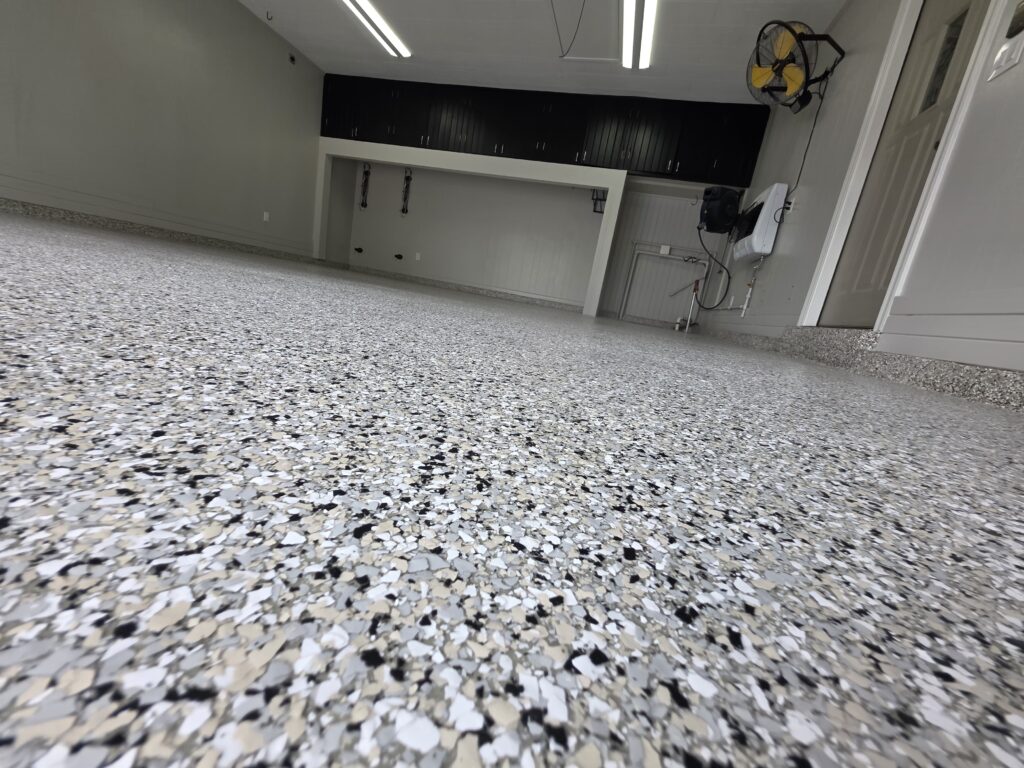
The Last Few Weeks Before School Starts. Use Them. There’s a specific kind of pressure that hits every August. The calendar fills up fast — school supply runs, sports registrations, meet-the-teacher nights, back-to-school haircuts — and suddenly summer is gone. And somewhere in the middle of all that, the project you’ve been meaning to get done for two years gets pushed to next year again. If your garage floor is one of those projects, this is the post for you. Get a Free Design Quote Summer Is Peak Season. For a Reason. Concrete coatings go down better in warm, dry weather. The slab temperature affects how the polyurea cures, how well the moisture mitigation layer bonds, and how long the finished surface takes to reach full hardness. Fort Wayne summers give us ideal conditions — warm slabs, low ambient moisture, and long days that allow us to complete the full five-layer system in a single visit. When we coat a garage floor in January, we’re working around cold concrete, moisture from snowmelt tracked in, and short days. The product still performs — polyurea is more forgiving than epoxy in cold conditions — but summer is simply the better environment. The cure is faster, the bond is stronger, and the finished surface reaches full hardness sooner. If you’ve been thinking about doing this, doing it in August means doing it under the best possible conditions. The Before-School Window Is Real. Think about what the garage looks like in September once school is back in session. Backpacks dropped by the door. Soccer cleats on the floor. Bike helmets, sports bags, school project supplies. The garage becomes the family staging area for the next nine months — and it’s going to look whatever way it looks right now for all of it. A coated floor changes how that space functions. It’s sealed, so mud and dirt wipe up in seconds instead of grinding into porous concrete. It’s bright, so the space actually feels like part of the house instead of a neglected utility room. And it’s durable enough to handle everything a family with school-age kids is going to throw at it — bike tires, spilled drinks, cleats, and the general chaos of a busy household. Getting it done in August means you walk into September with the garage already sorted. The first day of school arrives, and that part of the house is already working for you instead of against you. Which Concrete Coating Is Actually Right for Your Floor? Epoxy, polyurea, polyaspartic. They are not interchangeable. Choose wrong and you redo your floor in a few years. Choose right and it lasts. SEE BREAKDOWN
The State of the Concrete Coating Business in Indiana: Why 2026 Is a Breakout Year
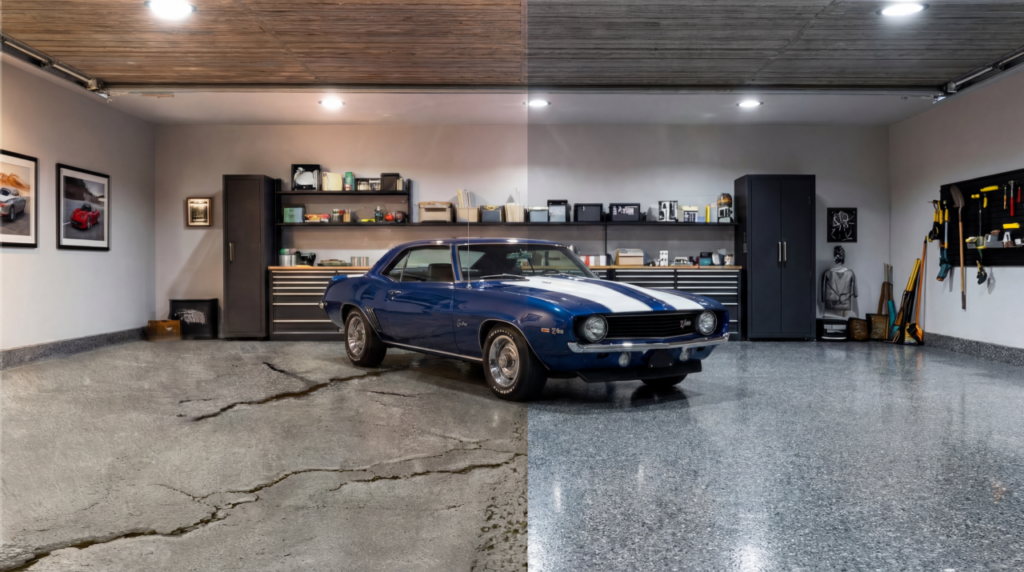
The State of the Concrete Coating Business in Indiana: Why 2026 Is a Breakout Year If you’ve noticed more garage floors with that sharp, high-gloss finish in your neighborhood lately, you’re not imagining it. Concrete coating — once a niche product used primarily in commercial warehouses and auto shops — has quietly become one of the fastest-growing home improvement services in Indiana, and the conditions driving that growth in 2026 couldn’t be more favorable. Get a Free Design Quote A National Industry Hitting Its Stride The concrete coating industry is in the middle of a sustained growth cycle. The global concrete floor coatings market is valued at approximately $5.78 billion in 2026 and is projected to reach $9.84 billion by 2034, expanding at a compound annual growth rate of around 6.7%. In the United States, residential demand is leading the charge — garage floor coatings alone account for 60% of home-related concrete coating sales nationally, driven by a wave of homeowners investing in their properties rather than trading up in a market where moving remains expensive and inventory stays tight. Polyurea and polyaspartic coatings — the professional-grade systems that have largely replaced old-school epoxy in the contracting world — are among the fastest-growing segments in the category, projected to grow at a 6.4% annual rate through the end of the decade. Homeowners and facility managers alike are choosing these systems because they outperform epoxy on nearly every measurable dimension: faster cure times, better adhesion, stronger resistance to moisture, UV rays, chemicals, and the kind of temperature swings that cause cheaper coatings to peel and crack within a few seasons. Indiana’s Housing Market Creates a Perfect Storm for Coaters Here’s where Indiana’s local market conditions become a real accelerant for the concrete coating business specifically. Indiana ranked number one in Realtor.com’s 2026 Housing Report Card — earning an A grade with a score of 76.3 out of 100 — driven by strong affordability and robust homebuilding activity. New construction is active across the state, particularly in the Indianapolis suburbs, Fort Wayne, and surrounding communities, with national builders adding subdivisions and building year-round. Every one of those new homes comes with a concrete garage floor, a concrete patio slab, or both — surfaces that builders leave unfinished and that new homeowners frequently want upgraded within the first year of move-in. At the same time, existing homeowners across Indiana are staying put. With mortgage rates hovering near 6% and Indiana home prices rising steadily — up 3.7% year-over-year as of May 2026, with a median sale price of $280,055 — many Hoosiers who might have sold and moved in previous years are instead choosing to invest in the home they’re in. That dynamic fuels home improvement spending across the board, and concrete coating sits at an interesting intersection: it’s a project that dramatically improves the look and function of a property, it’s typically completed in a single day, and it adds real, visible value at a fraction of the cost of a kitchen or bathroom remodel. The Fort Wayne market specifically continues to perform well. While affordability remains a concern — homeownership costs in the Fort Wayne area have pushed above the 30% of median household income threshold — the market remains far more accessible than comparable metros in other regions. That means more homeowners with equity, more pride of ownership, and more discretionary dollars available for premium home improvements. Commercial and Industrial Demand Is Equally Strong The residential story gets most of the attention, but the commercial side of concrete coating is just as active in Indiana. The state’s robust manufacturing base — spanning automotive suppliers, food processing, distribution, and logistics — creates consistent demand for high-performance industrial floor systems. Warehousing and logistics facilities drive 30% of industrial floor coating sales nationally, and Indiana’s position as a logistics hub, with its central geography and strong interstate access, means that category is well-represented here. Automotive shops, dealerships, and service facilities are another steady source of commercial coating work. These environments demand coatings that can stand up to constant vehicle traffic, hydraulic fluid, road salt, oil contamination, and daily cleaning cycles — requirements that standard epoxy simply cannot meet long-term. Professional polyurea systems designed for commercial use are the only real solution for facilities that need floors to perform day in and day out without requiring recoating every few years. Retail, hospitality, and institutional facilities are also driving demand for decorative concrete options — polished concrete and decorative coatings that combine durability with an upscale aesthetic are increasingly common in restaurants, breweries, fitness studios, and office lobbies across Indiana’s growing mid-sized cities. The Polyurea Advantage Is Reshaping Consumer Expectations One of the most significant shifts in the Indiana concrete coating market over the past several years is the education of the consumer. Homeowners who once accepted standard epoxy garage floor kits from the hardware store as the only option have increasingly learned — often through social media, contractor reviews, and word of mouth — that professional-grade polyurea systems offer a fundamentally different product. The gap isn’t subtle. A properly installed multi-layer polyurea system with a decorative flake broadcast is harder, more flexible, more UV-stable, and far more resistant to peeling and hot tire pickup than a single-coat epoxy application. That shift in consumer knowledge has been good for professional contractors and bad for DIY kit sales. Homeowners who understand the difference are willing to pay for the professional installation, and they increasingly expect a lifetime warranty to back it up. Contractors who can deliver on that promise — quality materials, proper surface preparation, and a warranty that means something — are winning in this market. Those who are cutting corners on prep or product quality are finding that negative reviews travel fast. What the Market Looks Like From the Ground In Northeast Indiana, the Fort Wayne metro and its surrounding counties represent a healthy and growing market for residential concrete coating. The region’s mix of established neighborhoods with aging garage slabs, new construction
Hello world!
Welcome to WordPress. This is your first post. Edit or delete it, then start writing!