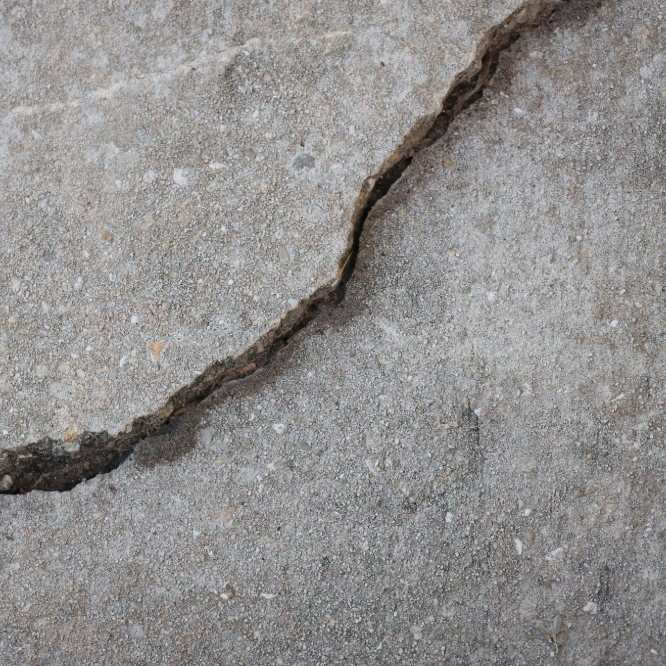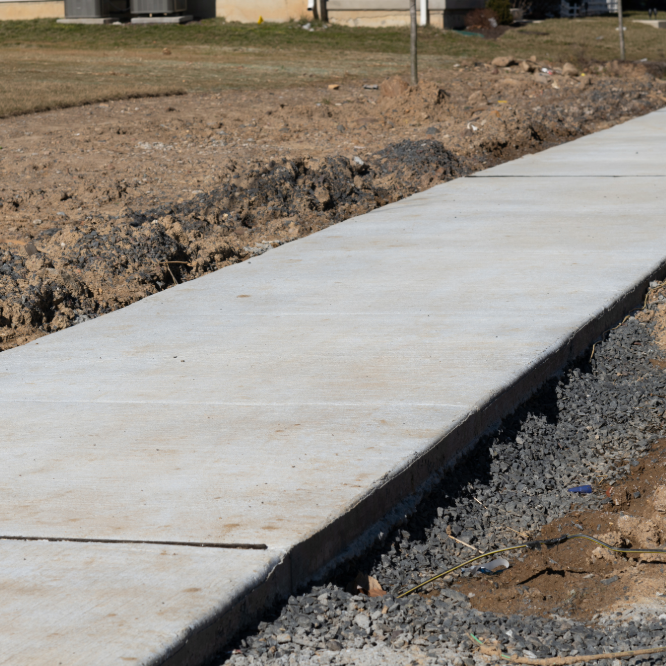

Most homeowners patch cracked sidewalks a few times before realizing the patch doesn't hold — it just moves the problem. Indiana's freeze-thaw cycles that caused the original crack keep working on the patch too, and within a season or two the repaired section looks worse than it did before.
Raised crack edges and uneven joints are a slip-and-fall waiting to happen — on your property. Municipalities can issue violation notices for hazardous sidewalks fronting your home. A heaved section isn't just an eyesore; it's a liability exposure.
Tree roots lifting panels from below, ground movement shifting sections out of alignment, and freeze-thaw cycles opening joints wider — patching the surface doesn't address what's happening underneath. Replacement does.
Most residential sidewalks were poured at 3–4 inches with no rebar. That was the minimum then, and it shows now. A thinner slab with no reinforcement doesn't have the strength to handle decades of freeze-thaw cycles, root pressure, and foot traffic.
A cracked, patched, stained front walk undercuts the first impression of your home regardless of everything else. A new sidewalk is one of the highest-visibility improvements you can make to a property's exterior.
"If the slab itself is structurally sound, we may be able to coat it — we do coatings too. If replacement is the right call, we'll tell you honestly and explain exactly why before any work is scheduled."
Standard sidewalk replacement pours at 4 inches. ArmorSlab™ pours at a minimum 5 inches — plus rebar, fiber reinforcement, and a documented pre-pour inspection. That difference shows up years later when a standard replacement is cracking again and yours isn't.
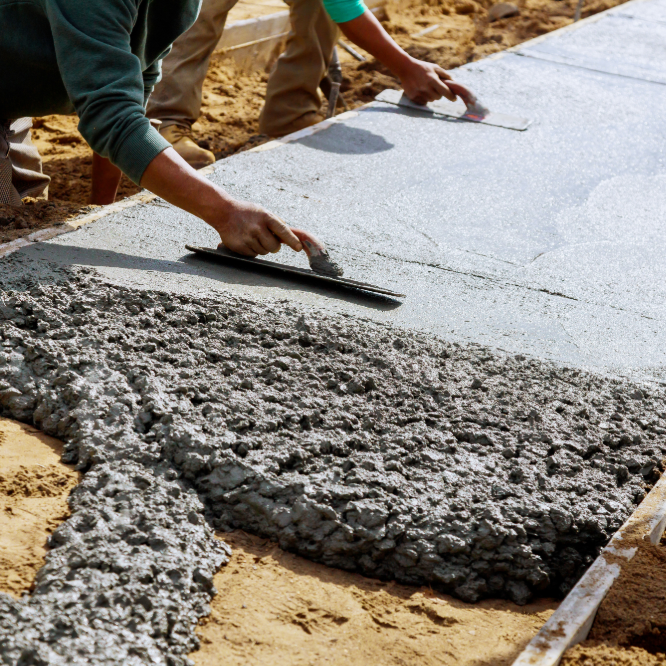
Full mechanical removal of the existing slab — no overlays, no resurfacing over a base that's already failed. Clean removal, clean start.
Root intrusion, soil voids, and improper base depth are addressed before anything is poured. Compacted aggregate base is the layer that prevents future settlement — it's what most contractors skip or rush.
#4 steel rebar in a proper grid on approved plastic chairs — elevated correctly so it sits inside the pour where it adds structural value. Rebar on the ground does almost nothing. Properly elevated rebar is what holds.
High-strength, air-entrained exterior concrete with fiber reinforcement mixed in — works alongside the rebar to reduce micro-cracking during curing and improve impact resistance over time. Most contractors don't include this.
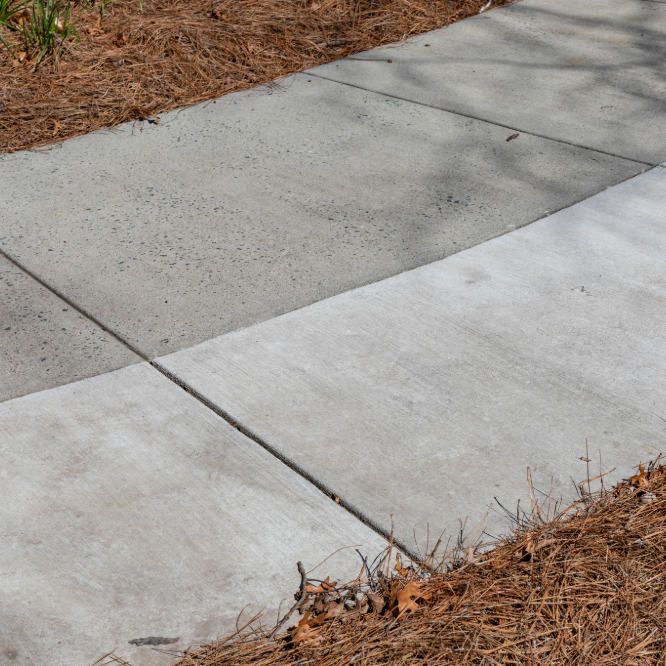
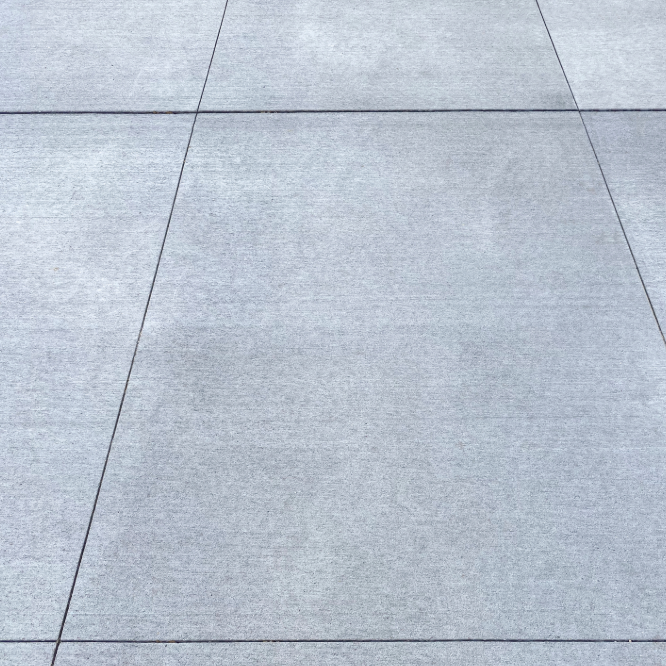
Poured at 5" minimum — 25% thicker than a standard 4" sidewalk. Control joints are cut at proper spacing to direct inevitable concrete movement to planned locations. Finished and broom-textured for traction.
Before any concrete is poured we photograph the compacted base, rebar layout and chair elevation, depth verification, form setup, and drainage slope. You receive the full pre-pour inspection record — the documented foundation of the 10-Year Structural Warranty.
Every photo is a real Outback sidewalk and walkway replacement.
Most concrete contractors offer nothing after the pour. ArmorSlab™ sidewalk and walkway replacement comes with a 10-Year Structural Warranty on qualifying installations — covering defective workmanship and structural failure caused by our installation.
All concrete expands and contracts with temperature changes. Control joints are cut to direct that movement to planned locations — cracks at control joints are expected and normal. The 10-Year Structural Warranty covers qualifying structural failure from defective installation, not normal concrete behavior. We explain this clearly at every estimate.