
Garages - Patios - Pool Decks - Basements - Commercial

Cracked Concrete

Cracked, weathered, or worn outdoor concrete doesn't always need to be torn out. Poured rubber surfacing goes directly over your existing slab — bonding to it, bridging surface cracks, and turning a problem surface into a seamless, slip-resistant, flexible finish that moves with Indiana's freeze-thaw cycles instead of fighting them

Request Service

OR CAll Us Directly

Request Service

OR CAll Us Directly

LIFETIME WARRANTY

Armor Core System™

A+ BBB RATED

1 DAY INSTALL

NO PEEL PROMISE

MOISTURE MITIGATION

LOCATED IN FORT WAYNE

The Problem

Cracked Concrete
Doesn't Have to
Mean Replacement.

Most homeowners facing cracked outdoor concrete assume they only have two options: live with it, or tear it out and start over. Poured rubber surfacing is a third option most contractors never mention — because most contractors don't install it.

Rubber concrete coating over existing cracked surface
Cracks Keep Growing

Indiana's freeze-thaw cycles push water into surface cracks, expand them over winter, and accelerate deterioration year after year. Left untreated, surface cracks become structural ones.

Hazard & Liability

Raised crack edges, uneven joints, and surface spalling create trip hazards on pool decks, patios, and walkways — especially dangerous around water where bare feet and wet surfaces are the norm.

Replacement Is Expensive and Disruptive

Full concrete replacement means demolition equipment, disposal costs, weeks of curing, and significant expense — even when the underlying slab is still structurally sound.

Poured Rubber Changes the Equation

If the concrete underneath is structurally sound — not heaving, not settled, not crumbling — poured rubber surfacing installs directly over the existing slab, no tear-out required. One day. No demolition. A completely new surface.

How It Works

Applied Over.
Bonded To.
Built to Last.

Poured rubber surfacing is a high-performance polymer resin blended with premium rubber granules, troweled directly over your existing concrete. Once cured, it becomes a single seamless, flexible surface — no seams, no grout lines, no separate pieces to shift.

1
Surface Preparation

The existing concrete is cleaned, evaluated, and surface cracks are filled and stabilized. No grinding equipment, no demolition — we work with what you have.

2
Primer Application

A bonding primer is applied to the prepared concrete surface, ensuring the rubber layer adheres at a molecular level — not just sitting on top.

3
Rubber Mix Troweled In Place

The polymer resin and rubber granule mix is hand-troweled over the full surface at an even, consistent depth. Color runs all the way through the granules — it won't chip, peel, or wear thin the way a surface coating can.

4
Cures to a Seamless Flexible Surface

Once cured, the result is a single continuous surface with no seams, joints, or edges to catch on. Its flexibility lets it move with the seasonal expansion and contraction that cracks rigid surfaces — instead of fighting it.

Why Rubber Works on Cracked Concrete
Flexible — moves with freeze-thaw cycles instead of cracking against them
Bridges and seals surface cracks — eliminates trip edges and water entry points
Seamless finish — no grout lines, no pavers, no joints to shift
Slip-resistant when wet — critical for pool decks, patios, and walkways
No tear-out, no demolition, no weeks of curing — installed in a day
40+ year proven system — not an experiment
Where It Works

Every Cracked Outdoor Surface.

Rubber resurfacing works on any structurally sound outdoor slab — if the concrete underneath isn't heaving or crumbling, it's a candidate.
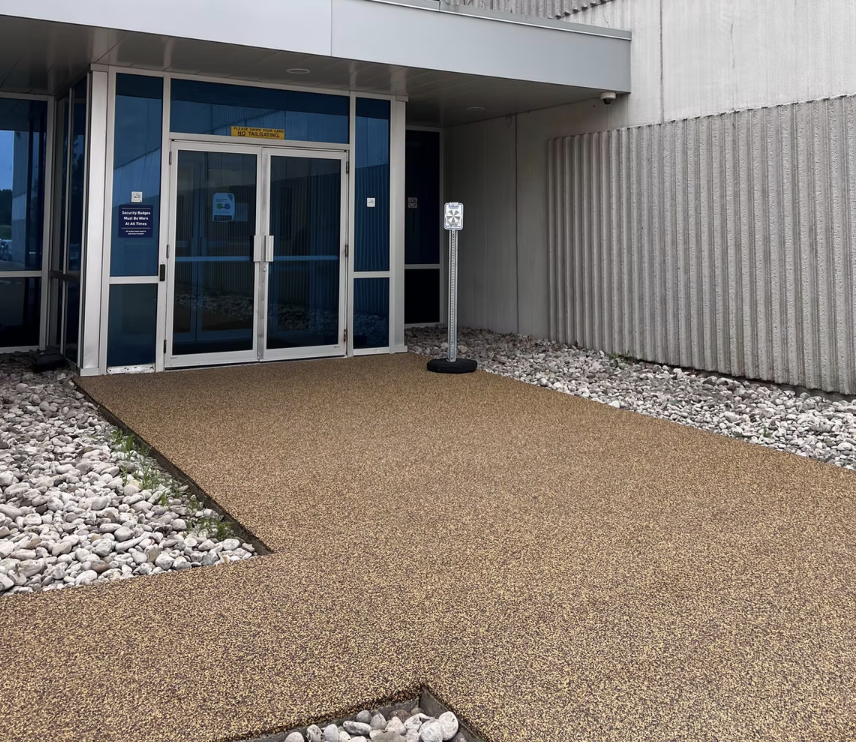
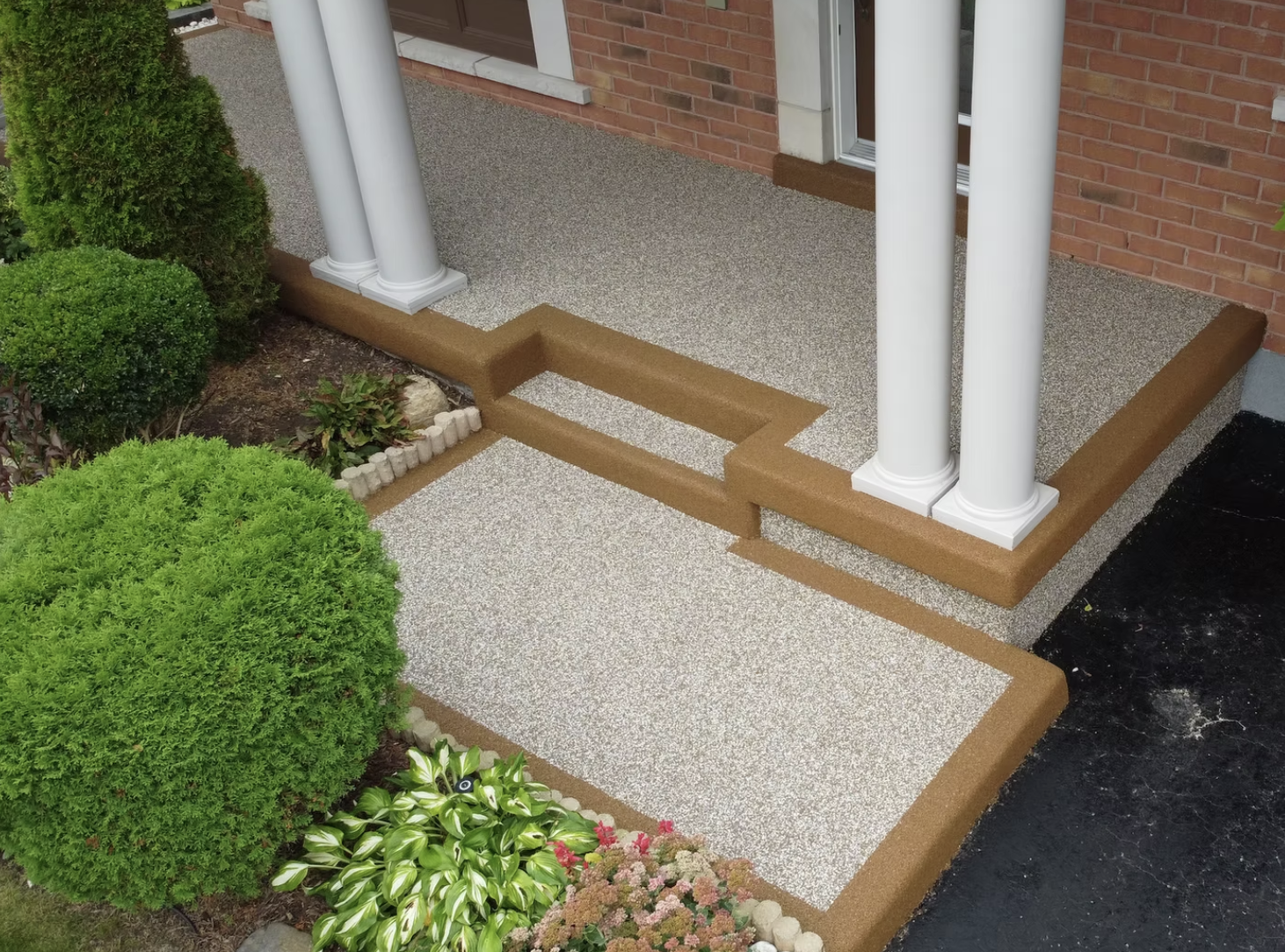
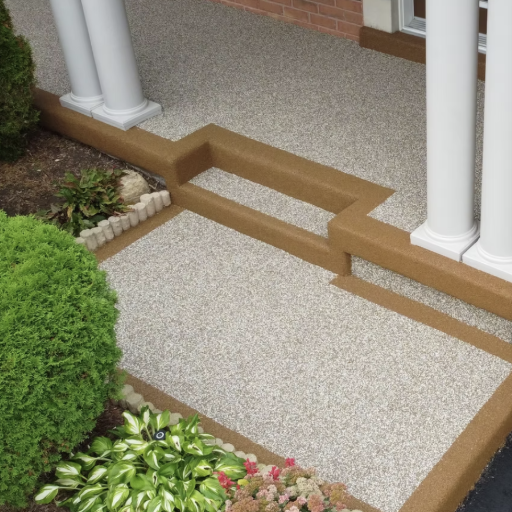
Rubber resurfacing over existing cracked concrete surface
Outdoor Surface
Rubber surfacing over cracked patio concrete Fort Wayne
Cracked Patio
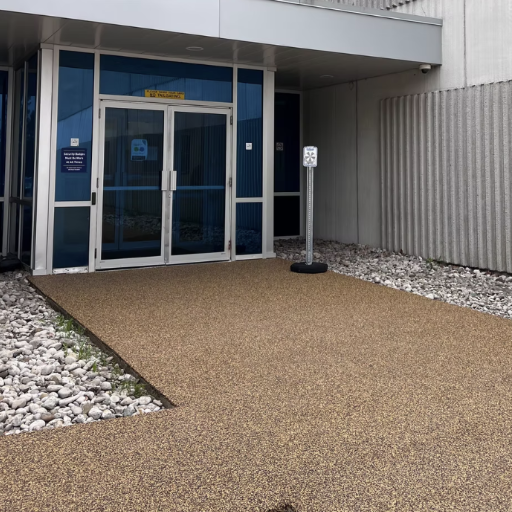
Rubber resurfacing over worn walkway concrete
Cracked Walkway
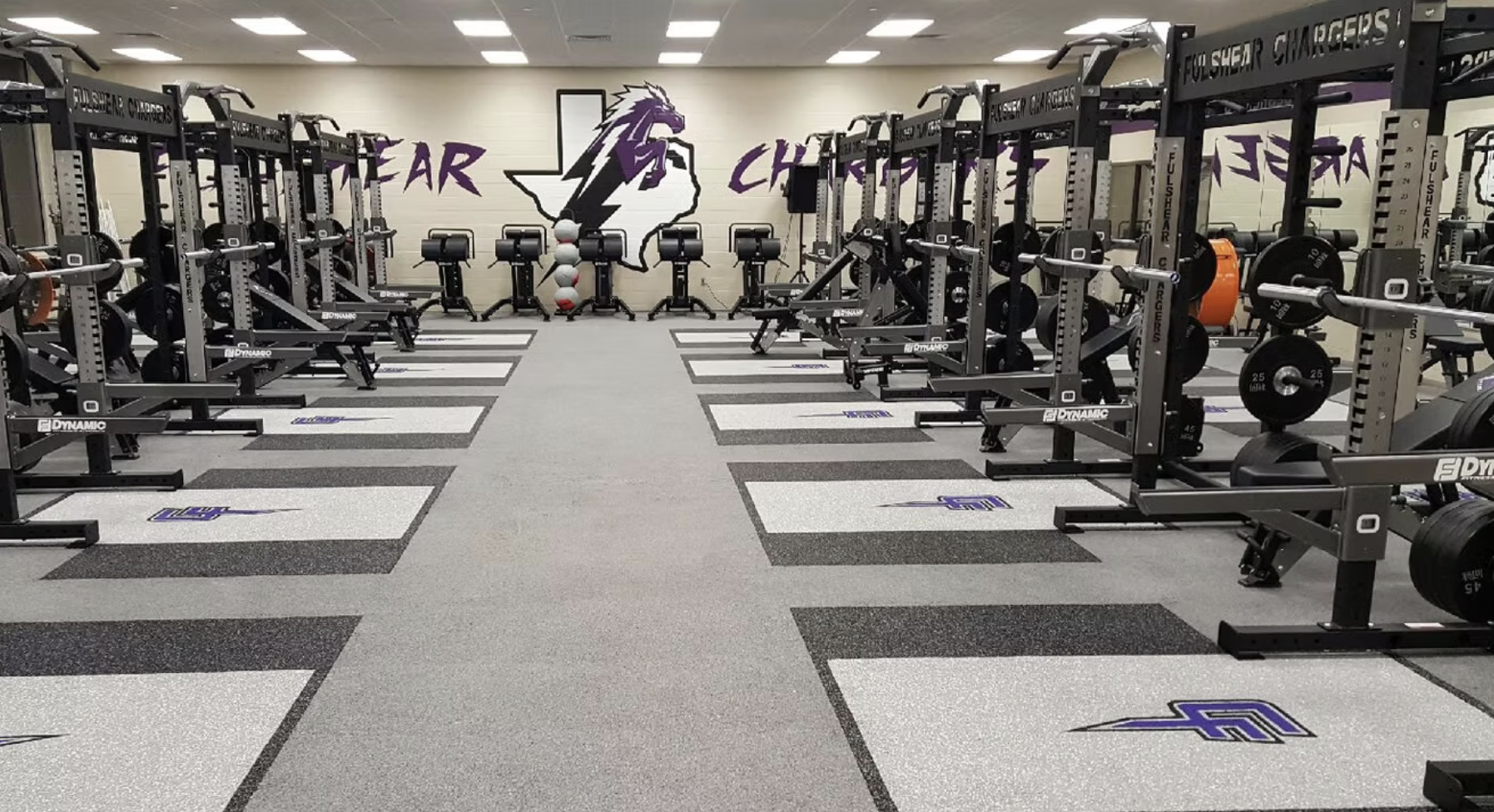
Rubber surfacing over worn commercial concrete floor
Worn Gym Floor
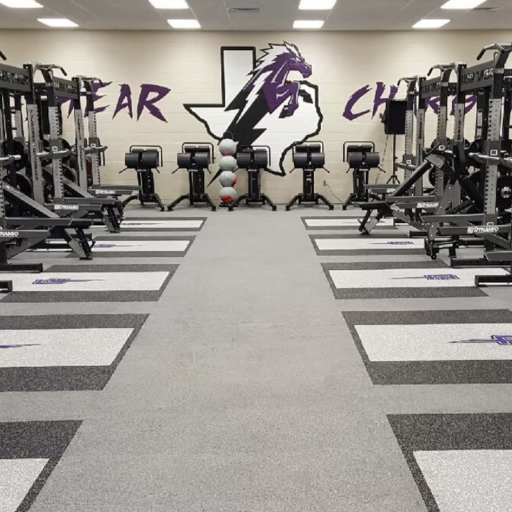
Rubber resurfacing commercial concrete floors Fort Wayne Indianapolis
Commercial Space
Cracked pool decks & spa surrounds
Weathered patios & porches
Surface-cracked walkways & sidewalks
Worn driveways with surface deterioration
Commercial floors, gyms & rec areas
Playground areas & splash pads
FAQ

Common Questions About
Rubber Resurfacing Over
Cracked Concrete.

Can rubber surfacing go over cracked concrete without removing it?+
Yes — in most cases. Poured rubber surfacing is applied directly over your existing concrete slab. Surface cracks are filled and stabilized during prep, and the rubber layer bonds to the concrete beneath it. No tear-out, no demolition, no heavy equipment. The key qualifier is that the slab must be structurally sound — not heaving, not severely settled, and not actively crumbling. We assess this at the free estimate.
What kind of cracks can rubber surfacing cover?+
Surface cracks — hairline cracks, shrinkage cracks, weathering cracks, and minor expansion joint deterioration — are all candidates. These are filled, stabilized, and covered by the rubber layer. What rubber can't fix is structural failure: actively moving cracks, significant heaving or settling between sections, or widespread concrete deterioration. Those situations usually require ArmorSlab™ replacement first. We'll tell you honestly which applies at the estimate.
Will the cracks show through the rubber after it cures?+
Not with proper preparation. Surface cracks are filled during the prep phase before the rubber goes down. Because the rubber layer is flexible, it also bridges minor movement that happens underneath — rather than telegraphing cracks through a rigid surface coating, the rubber can flex slightly with the substrate. The result is a smooth, seamless surface finish with no visible crack lines.
Why doesn't rubber resurfacing crack the way concrete does?+
Concrete cracks because it's rigid. When the ground moves beneath it — from freeze-thaw cycles, settling, or thermal expansion — concrete can't flex, so it fractures. Rubber's polymer-based chemistry gives it genuine flexibility. Instead of fighting the substrate movement, it accommodates it. That's why a 40-year-old rubber surfacing system in a Minnesota climate still looks intact while the concrete beside it is fractured.
How does rubber resurfacing compare in cost to concrete replacement?+
Rubber resurfacing is typically significantly less expensive than full concrete replacement — because you're not paying for demolition, hauling, disposal, or weeks of curing time. You're getting a new surface in a day, over existing concrete that still has structural life in it. For the right slab, it's a smarter investment by a wide margin. We'll tell you at the estimate whether your concrete qualifies, and give you an honest price for both options if replacement is on the table.
How long does rubber resurfacing installation take?+
Most residential installations — pool decks, patios, walkways — are completed in a single day. Larger commercial projects may take two days. Curing time before foot traffic is typically 24 hours. We'll give you a specific timeline at the estimate based on your project size and surface type.
Is rubber resurfacing safe around pools — is it slip-resistant?+
Yes. Slip resistance when wet is one of rubber surfacing's defining characteristics — it's a primary reason it's been the material of choice for pool decks for over 40 years. The texture of the rubber granule surface provides consistent traction whether the surface is wet or dry, in bare feet or shoes. It also stays significantly cooler underfoot than bare concrete in direct sun.
My concrete is cracked but it's still solid — is it a good candidate?+
Likely yes. If your slab is flat, stable, and not actively heaving or crumbling — even with significant surface cracking — rubber resurfacing is probably your best option. We'll walk the slab at the free estimate and tell you in plain terms whether it qualifies, what the result will look like, and what it costs. No pressure, no obligation.
Get Started

Stop Looking at
That Cracked Concrete.

Free estimate. We evaluate your slab, tell you honestly whether it qualifies for rubber resurfacing, and give you an exact price before any work begins.

(260) 600-7600
No Tear-Out · No Demolition · One-Day Install
40+ Year Proven System
Slip-Resistant · Flexible · UV-Stable
Fort Wayne & Indianapolis · A+ BBB