
Rubber Surfacing - Pool Decks

Concrete Pool Deck Rubber Surfacing

Bare concrete pool decks are hot underfoot, slippery when wet, and crack every Indiana winter. Poured rubber surfacing solves all three — in one day, over your existing concrete, with no tear-out. Cool underfoot. Slip-resistant when wet. Seamless. Backed by a 40-year proven system.

Request Service

OR CAll Us Directly

Request Service

OR CAll Us Directly

LIFETIME WARRANTY

Armor Core System™

A+ BBB RATED

1 DAY INSTALL

NO PEEL PROMISE

MOISTURE MITIGATION

LOCATED IN FORT WAYNE

The Problem

Bare Concrete Is the
Worst Surface for
a Pool Deck.

It absorbs heat. It gets slippery when wet. It cracks every freeze-thaw cycle. Pool decks take a harder beating than almost any other outdoor surface — constant moisture, UV exposure, chlorine, bare feet, and Indiana winters. Bare concrete handles none of that well.

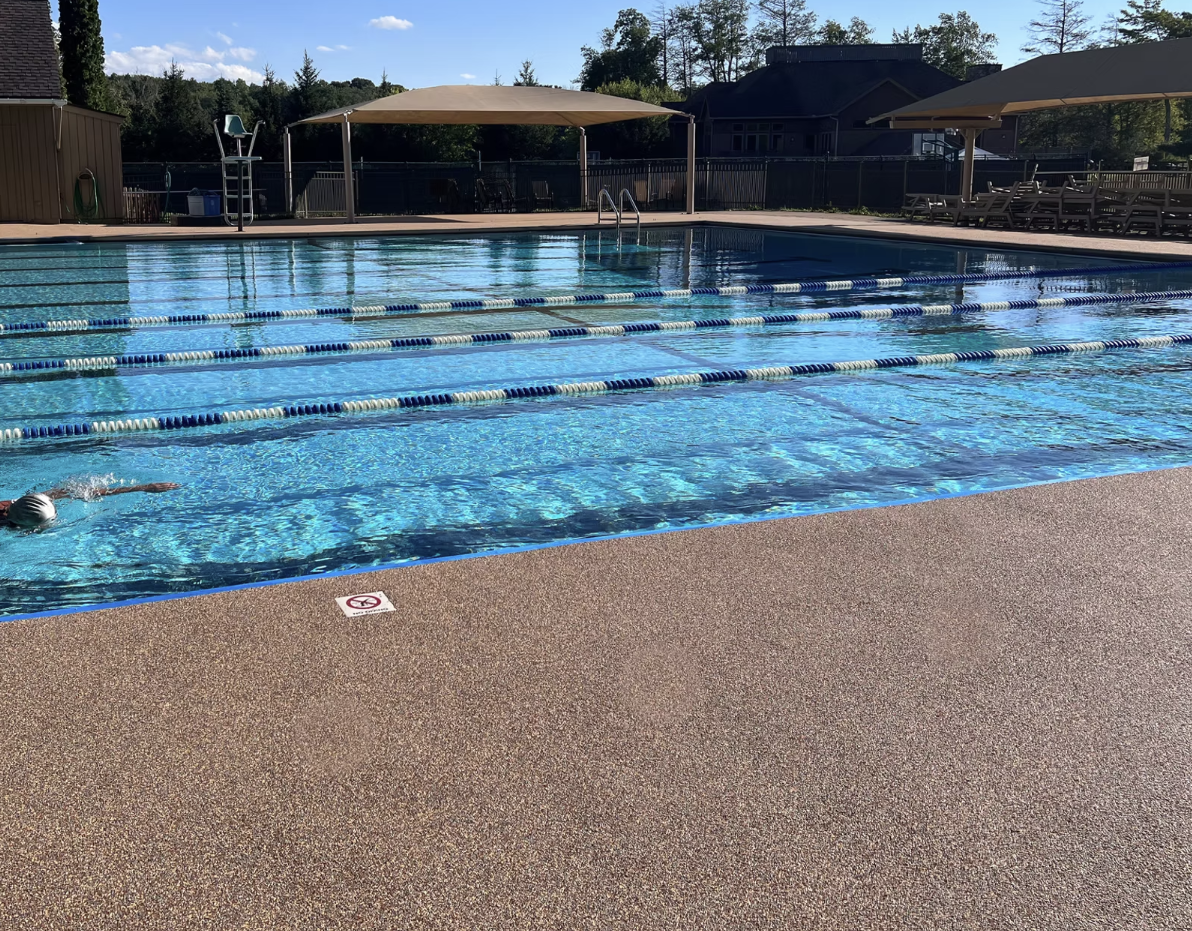
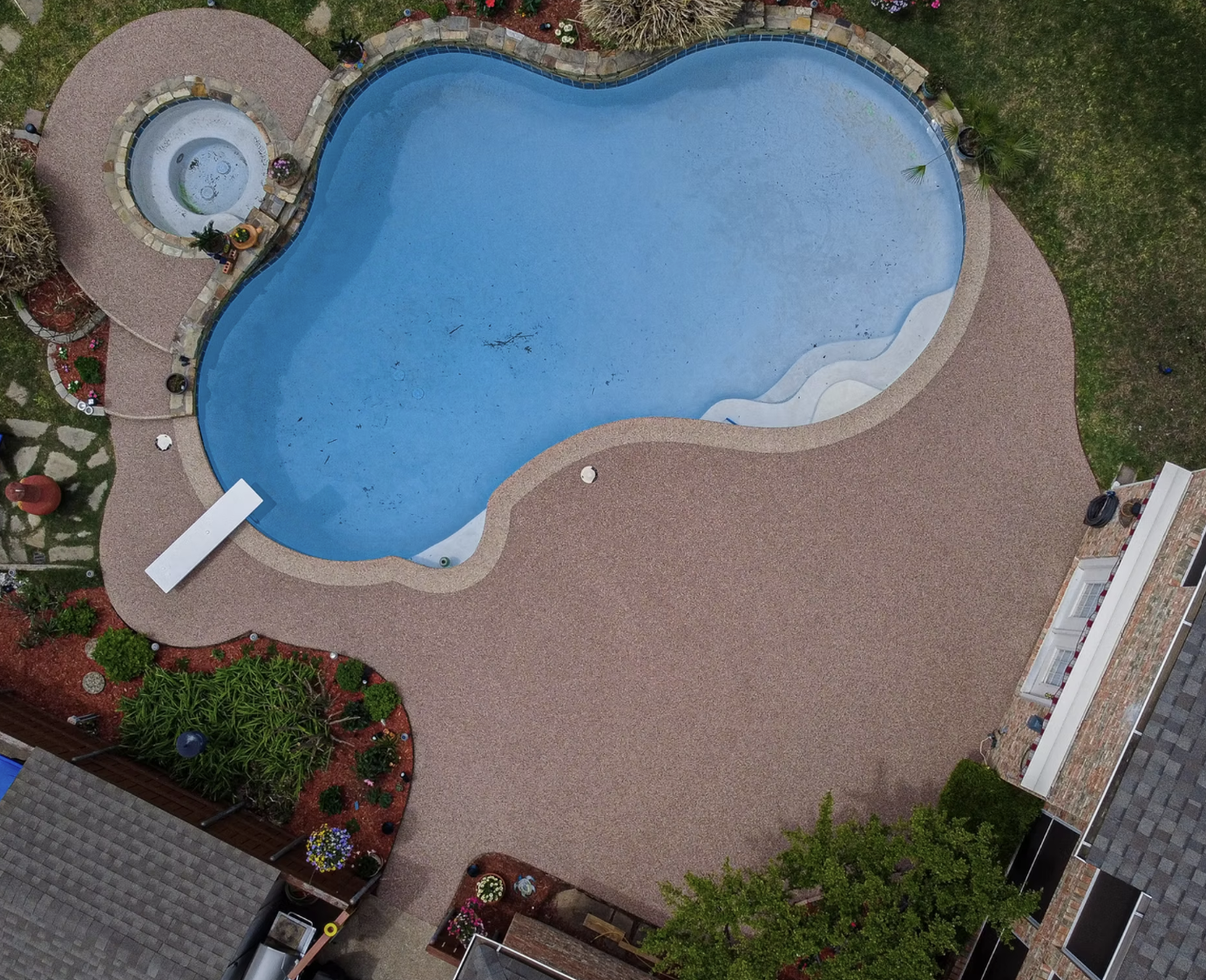
Rubber resurfacing installed over existing pool deck concrete Fort Wayne
Burns Bare Feet

Bare concrete in direct Indiana summer sun can reach surface temperatures of 130°F or more — painful and dangerous for kids and adults in bare feet. It defeats the point of an outdoor pool space.

Dangerously Slippery When Wet

Wet concrete around a pool is one of the most common causes of outdoor slip-and-fall accidents. A surface that gets saturated constantly needs inherent traction — not painted-on grip that wears off.

Cracks Every Winter

Water pools in pores and low spots, freezes, expands, and opens surface cracks wider every year. Pool deck concrete is thinner and more exposed than most slabs — it deteriorates faster than any other outdoor surface.

Chlorine & Chemical Degradation

Chlorinated water and pool chemicals absorbed into unprotected concrete accelerate surface breakdown and leave staining that can't be cleaned off. Over time the surface spalls and crumbles from the outside in.

Poured rubber surfacing addresses every one of these problems — cool underfoot, slip-resistant when wet, flexible enough to survive freeze-thaw cycles, and sealed against chemical absorption. Installed in a day over your existing concrete.

The System

Why Rubber Has Been
the Pool Deck Standard
for 40+ Years.

Poured rubber surfacing was developed specifically for pool environments. The material properties that make it ideal for a pool deck aren't bonuses — they're exactly what a pool deck demands.

1
Cool Underfoot — Even in Direct Sun

Rubber's thermal properties keep the surface dramatically cooler than bare concrete in direct sun — comfortable in bare feet even on the hottest Indiana summer days. This is the single most common reason homeowners choose rubber for pool decks.

2
Slip-Resistant When Wet — Permanently

The rubber granule texture provides consistent, reliable traction wet or dry. This isn't a surface treatment that wears off — it's built into the material itself. Safe in bare feet every time.

3
Flexible — Survives Indiana Winters

Unlike rigid coatings and bare concrete, poured rubber flexes with seasonal temperature movement instead of cracking against it. Indiana's freeze-thaw cycles that destroy concrete year after year don't affect a properly installed rubber surface.

4
Chlorine & Chemical Resistant

The sealed rubber surface resists absorption of chlorinated water, pool chemicals, sunscreen, and cleaning agents — exactly what a pool deck lives with every season.

5
Seamless — No Joints, No Edges, No Trip Points

Poured rubber cures as a single continuous surface with no seams, grout lines, or joints for water to pool in or edges to catch on. No joints means no algae spots, no trip points, and no maintenance headaches.

6
Over Your Existing Concrete — No Tear-Out

Rubber surfacing bonds directly to your existing concrete slab. No demolition, no disposal, no weeks of curing. Most pool deck installations are complete in a single day.

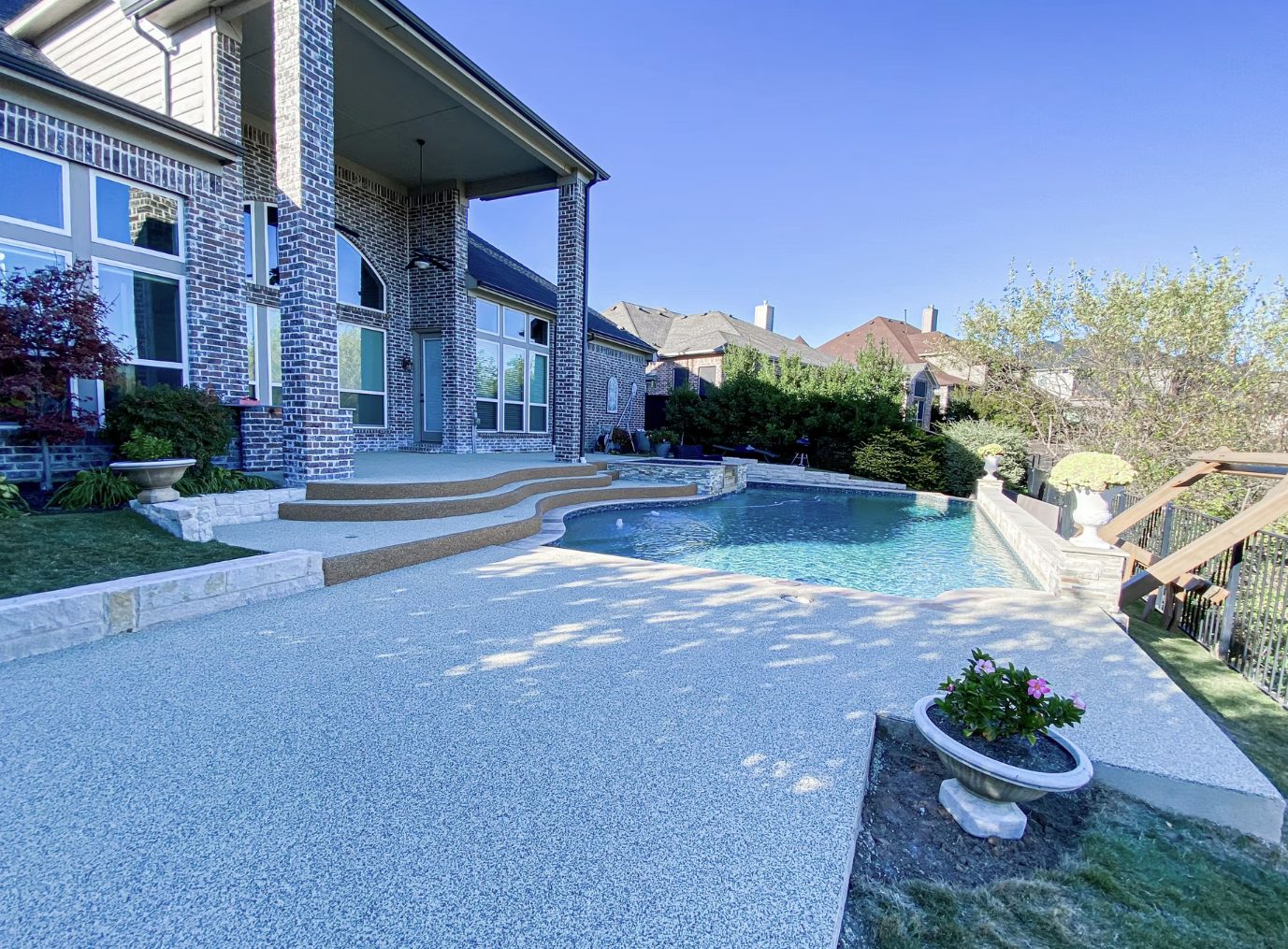
Poured rubber pool deck close up texture Fort Wayne Indianapolis
Real Installations

See the Difference.

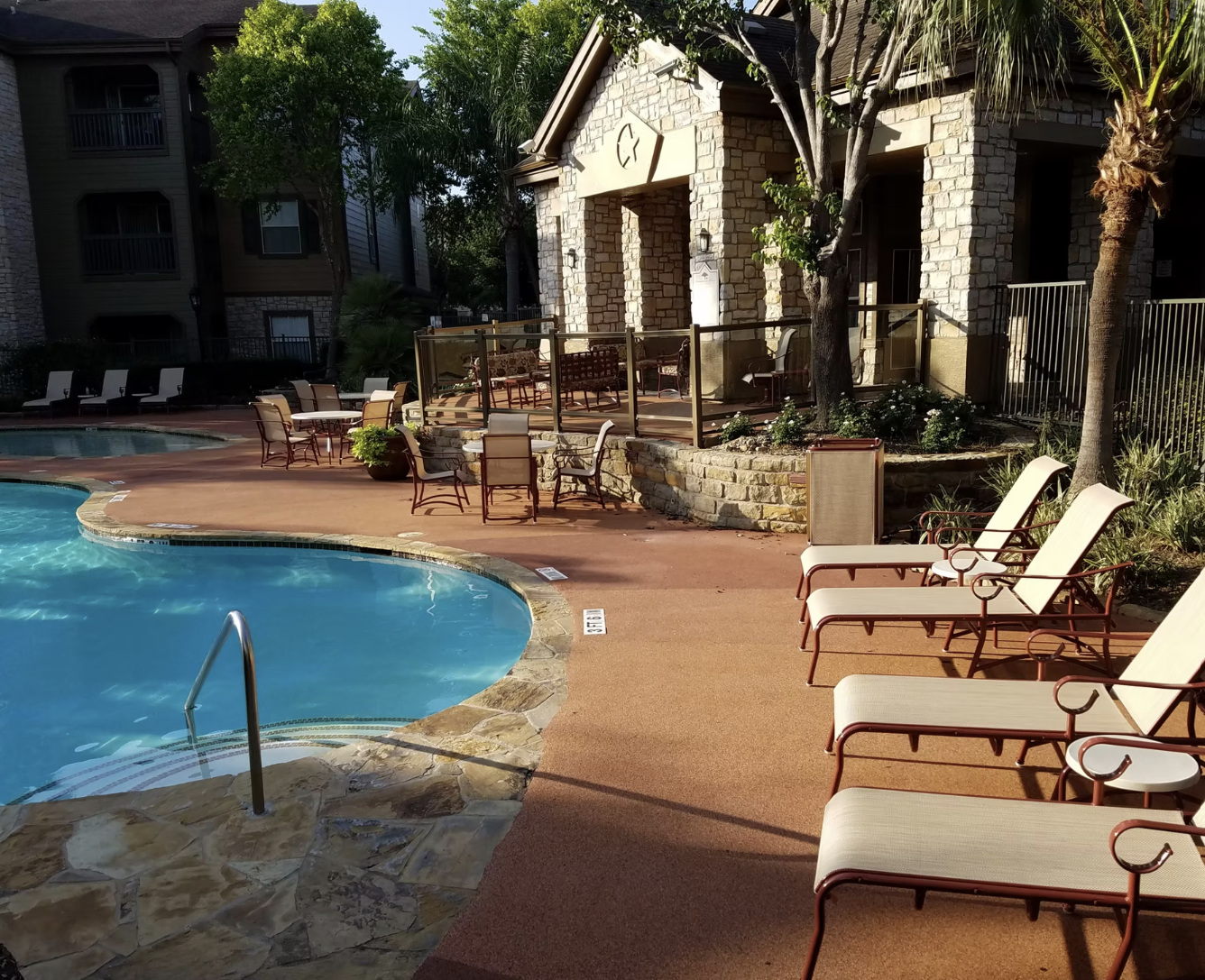
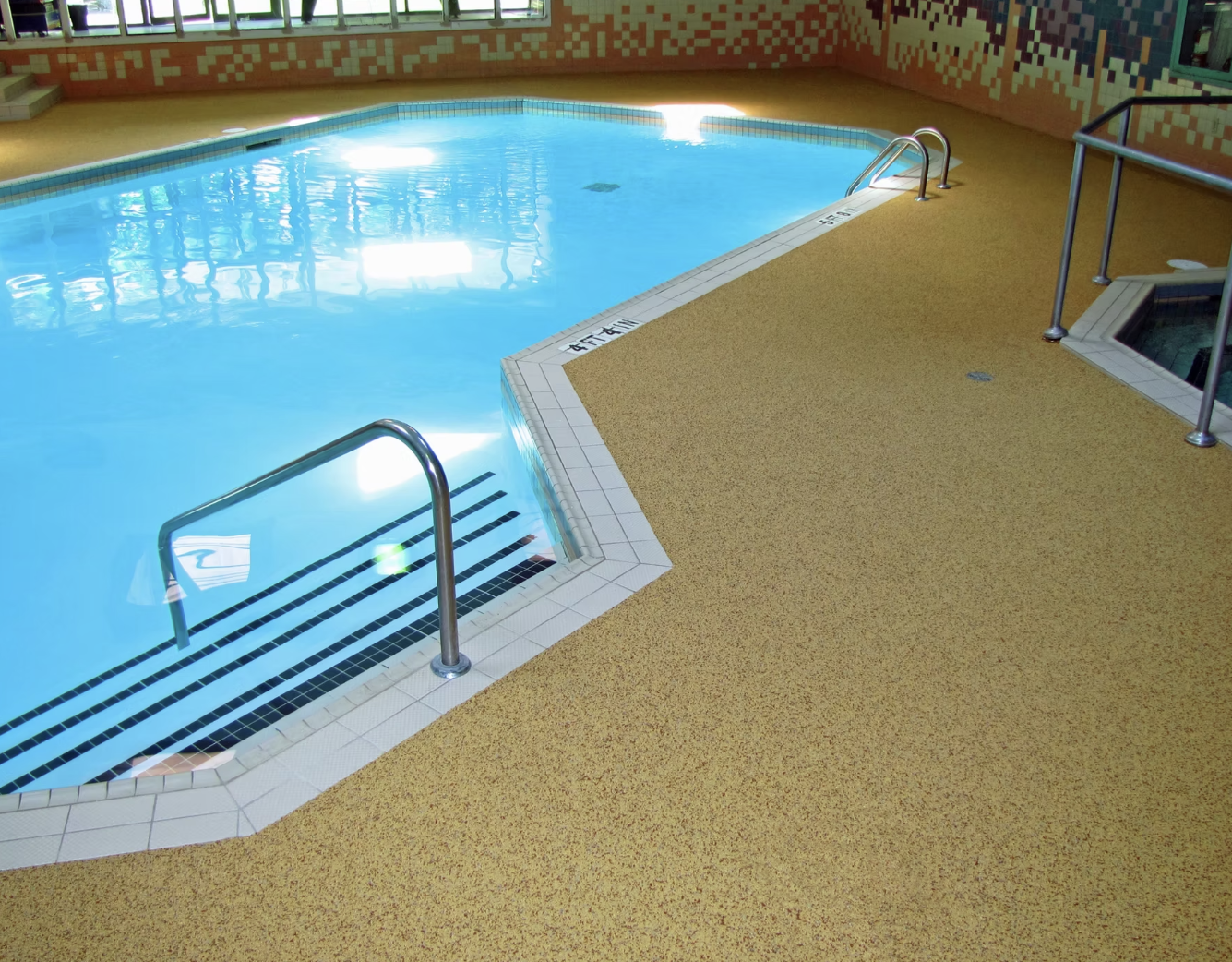
Every photo is a real Outback rubber pool deck installation.

Rubber pool deck installation — finished surface Fort Wayne Indiana
Rubber pool deck resurfacing close up texture
Poured rubber pool surround finished installation
Rubber concrete coating applied over pool deck
Rubber pool deck surface texture detail
Color Runs Through — Not Just On Top

The color runs all the way through the rubber granules — not painted on the surface. It won't fade, peel, or chip away. Available in dozens of blends to complement your home's exterior and pool design.
FAQ

Common Questions About
Rubber Pool Deck Surfacing.

Is rubber surfacing actually safe around a pool — won't it be slippery?+
The opposite — slip resistance when wet is the primary reason poured rubber surfacing has dominated pool deck applications for over 40 years. The rubber granule texture provides consistent traction in bare feet, wet or dry. Bare concrete is far more slippery around a pool than a properly installed rubber surface.
How much cooler is rubber than concrete in the summer?+
Significantly — rubber surfaces run 20–30°F cooler than bare concrete in direct sunlight. Bare concrete pool decks can reach 130°F or higher on a hot Indiana summer day. A rubber-surfaced pool deck stays comfortable underfoot even in peak afternoon heat. For families with kids this is usually the deciding factor.
Does rubber surfacing go over existing cracked pool deck concrete?+
In most cases yes. Surface cracks are filled and stabilized during prep, then covered by the rubber layer. The rubber also flexes with minor future movement instead of cracking. Significant structural failure would need to be addressed first — we assess this at the free estimate and tell you honestly which situation you're in.
How long does installation take and when can we use the pool area again?+
Most residential pool deck installations complete in a single day. The surface needs approximately 24 hours before foot traffic and 48 hours before placing furniture. Full use within two days — compare that to weeks of downtime for a full concrete replacement.
Will chlorine and pool chemicals damage the rubber surface?+
No. The rubber surface is sealed and resistant to chlorine, pool chemicals, sunscreen, and cleaning agents. This is one of the reasons rubber surfacing has been the material of choice for pool environments for decades — it was designed for exactly this.
What color options are available?+
Dozens of color blends are available — natural stone tones, earth tones, and accent colors. Because the color runs all the way through the rubber granules rather than sitting on the surface, it won't fade, chip, or peel. We bring samples to the free estimate so you can see colors in your specific outdoor environment before deciding.
How does rubber hold up through Indiana winters?+
Extremely well. Rubber's flexibility is what makes it ideal for Indiana's freeze-thaw cycles. While concrete absorbs water, freezes, expands, and cracks, rubber flexes with the movement. The freeze-thaw cycles that destroy concrete year after year don't affect a properly installed rubber surface the same way.
Can rubber surfacing go around an above-ground pool too?+
Yes — rubber surfacing works on any structurally sound concrete surrounding an above-ground pool as well as in-ground pool decks. We'll assess your specific setup at the free estimate and tell you honestly what works for your situation.
Get Started

A Better Pool Deck
Starts This Season.

Free estimate. We assess your existing concrete, tell you exactly what's possible, and give you a price before any work begins. One day to install. Done before your next pool party.

(260) 600-7600
✓Cool Underfoot · Slip-Resistant When Wet
✓No Tear-Out · One-Day Install
✓Chlorine & Chemical Resistant
✓40+ Year Proven System · Fort Wayne & Indianapolis