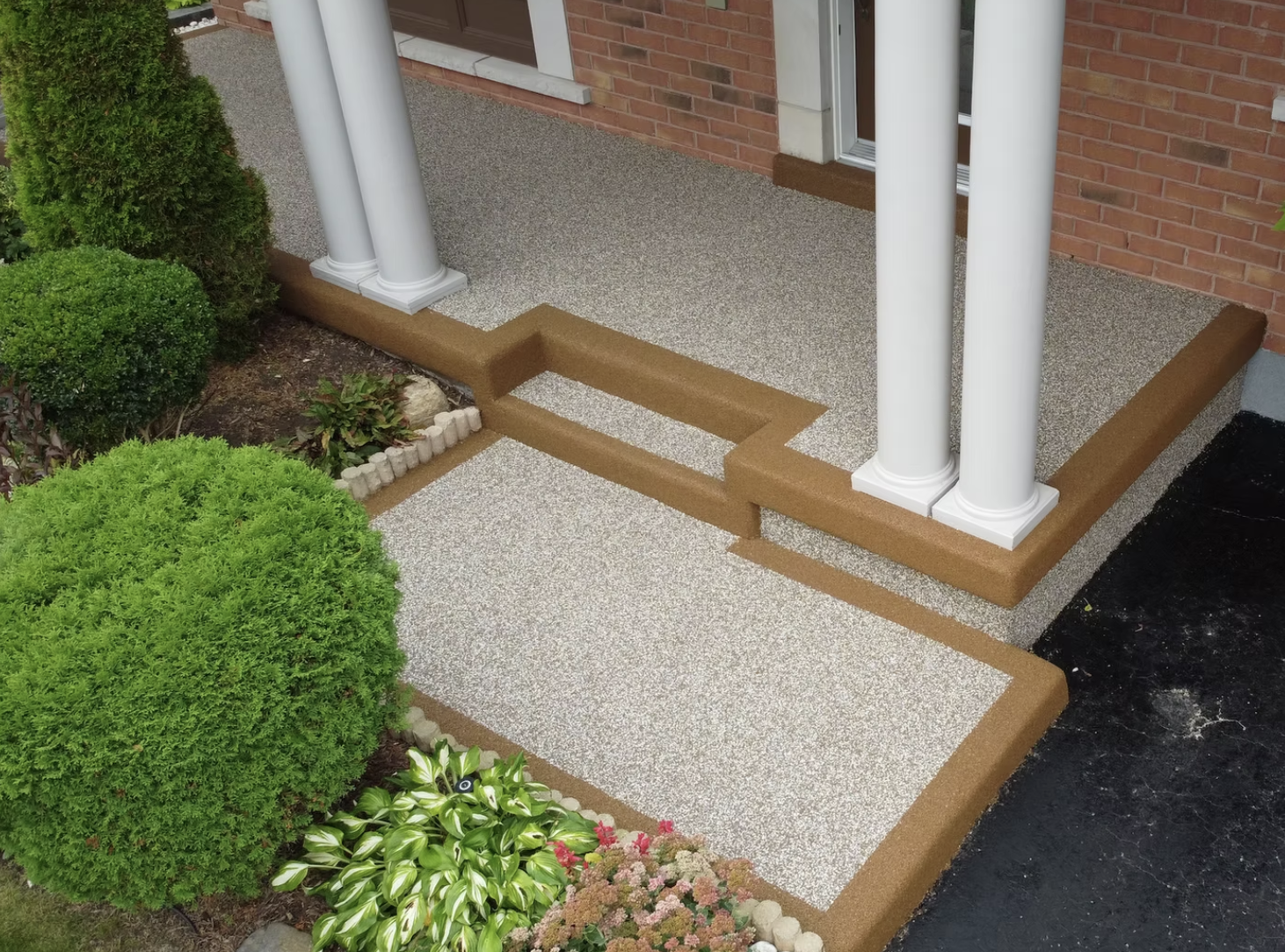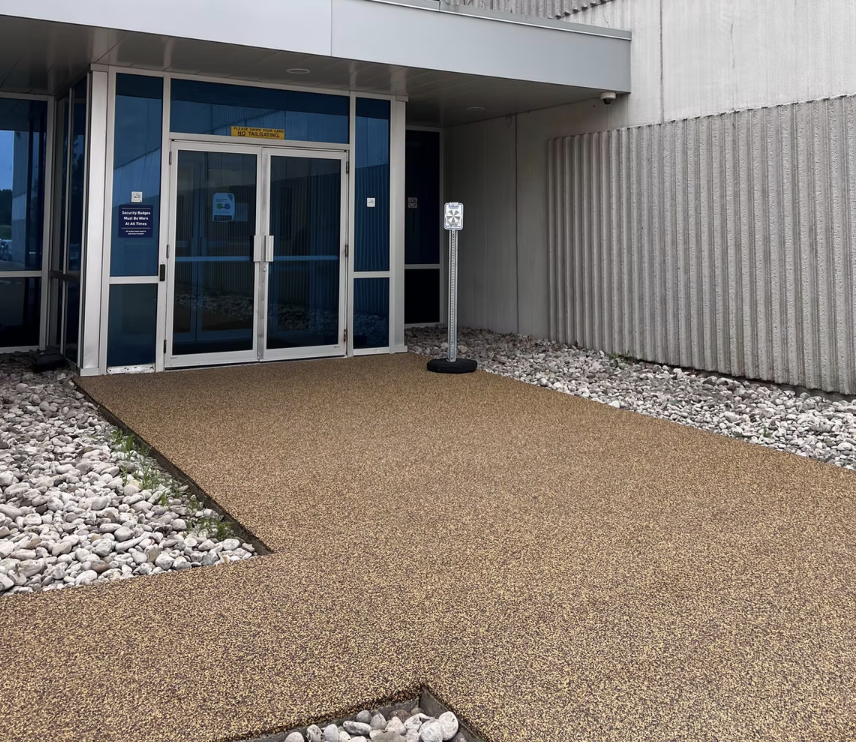

Commercial and institutional floors face demands that residential surfaces never encounter — continuous foot traffic, heavy equipment, wet conditions, chemical cleaning agents, and liability exposure from slip-and-fall incidents. Poured rubber surfacing was developed for exactly these environments.

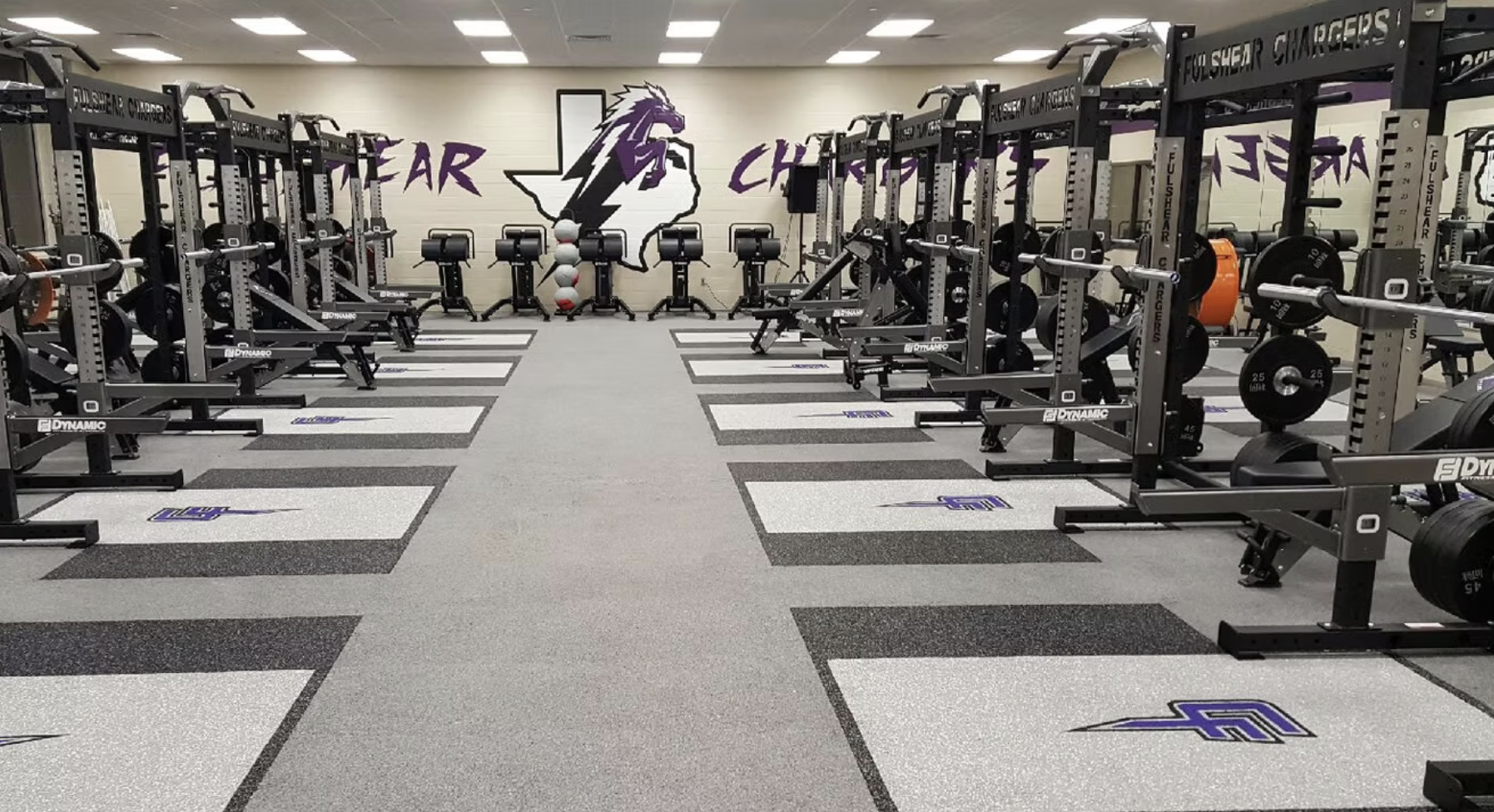
Weight rooms, cardio areas, locker rooms, and group fitness spaces. Rubber surfacing cushions impact, reduces noise, resists moisture and cleaning chemicals, and holds up under constant heavy foot traffic and dropped equipment. The same material used in professional athletic facilities for decades.

Pool decks, spa surrounds, locker rooms, and wet common areas at YMCAs, community centers, hotels, and aquatic facilities. Slip resistance when wet is non-negotiable in these environments — rubber surfacing delivers it permanently, not as a surface treatment that wears off.

Schools, rec centers, government facilities, and municipal buildings where surface durability, safety compliance, and minimal maintenance downtime are all requirements. Rubber surfacing can often be installed over existing concrete without closing the facility for extended periods.
Bare concrete and standard coatings fail in commercial environments for the same reasons — they weren't designed for the combination of moisture, chemical cleaning, constant traffic, and liability exposure that a commercial floor faces every day.
Slip-and-fall incidents are the number one source of liability claims in commercial facilities. The rubber granule texture provides consistent, measurable traction wet or dry — not a surface additive that degrades with cleaning and traffic. It's built into the material permanently.
Commercial cleaning chemicals, sanitizers, pool chemicals, and industrial degreasers that degrade standard coatings don't penetrate a properly sealed rubber surface. The surface stays cleanable and intact through aggressive cleaning schedules.
Rubber's natural give reduces impact on joints and reduces fatigue for staff who stand and walk on it for hours. In fitness and gym environments, it cushions dropped weights and protects both the floor and the equipment. In senior living settings, it reduces injury severity in fall incidents.
A seamless poured surface has no grout lines, no seams, and no joints where moisture, bacteria, and mold can accumulate. In locker rooms, pool decks, and food service areas this is a meaningful hygiene and maintenance advantage over tile and other jointed surfaces.
Rubber absorbs sound rather than reflecting it — reducing ambient noise levels in high-traffic corridors, gym floors, and multi-use spaces. A measurable improvement over bare concrete or hard-surface flooring in any environment where acoustics matter.
Most commercial rubber surfacing projects install directly over existing concrete — no demolition equipment, no weeks of closure. Many facilities complete installation over a single weekend or during a scheduled maintenance window. That's a significant operational advantage over concrete replacement or tile installation.

Commercial projects require more planning than residential ones — access windows, phased installation, and minimal disruption to ongoing operations. Here's how we approach it.
We walk the facility with the facilities manager or owner. Assess existing concrete condition, moisture, drainage, and any surface cracking. Discuss access windows, operational constraints, phasing needs, and color requirements. The spec comes from the facility's actual demands.
Existing concrete is cleaned, surface cracks are filled and stabilized, and the surface is prepared for bonding. No heavy demolition equipment in most cases — significantly less disruption than tile removal or concrete replacement.
A bonding primer is applied to the prepared concrete surface to ensure the rubber layer achieves a permanent mechanical bond — not just surface adhesion.
The polymer resin and rubber granule mix is hand-troweled at a consistent, uniform depth across the full surface. Color options are selected to meet facility requirements — from neutral tones to high-visibility accent colors for safety zones and wayfinding.
The rubber surface cures to foot traffic within 24 hours. Most commercial projects are complete within the scheduled access window — a single maintenance shift, weekend, or holiday closure — and the space is back in operation within 24 to 48 hours.
For facilities that can't close entirely, we can phase installation by section — completing one area while the rest remains operational. We plan around your schedule, not ours. Bring that conversation to the facility assessment and we'll design an installation plan that works within your operational constraints.
Free facility assessment. We walk the space with you, discuss your operational constraints, and give you an exact price and installation plan before any work is scheduled.
(260) 600-7600Our Services
Every project starts with the same goal: a floor that looks great and holds up. Whether that means coating what you have, upgrading to a rubberized finish, or starting over with fresh concrete, it's all part of the Outback process.